#include <bem.h>
List of all members.
Public Member Functions |
| | D3electrode () |
| | Constructor for an electrode.
|
| | ~D3electrode () |
| void | insert (PD3element el) |
| | Allocates an D3element to an electrode, multiple elements can be allocated to one electrode.
|
| void | SetVoltage (double voltage_) |
| | Sets the voltage for the electrode. Unit: Volt.
|
| double | GetVoltage () |
| | Gives the voltage of the electrode. Unit: Volt.
|
| void | SetSymmetryWith (bool xsym, bool ysym, bool zsym, bool diagmirror, D3electrode *symel2, int rotsym=0, int totalrot=0) |
| | Eliminates small numerical deviations from perfect symmetry.
|
| void | SetSymmetry (bool xsym, bool ysym, bool zsym, bool diagmirror, int rotsym=0, int totalrot2=0) |
| | Eliminates small numerical deviations from perfect symmetry.
|
| D3electrode * | GetSymmetryWith (int num) |
| int | GetTotalrot () |
| void | SetCardinalNumber (int num) |
| int | GetCardinalNumber () |
Protected Attributes |
| int | cardinalnum |
| double | voltage |
| D3electrode ** | symel |
| int | totalrot |
Constructor & Destructor Documentation
| D3electrode::D3electrode |
( |
| ) |
|
Constructor for an electrode.
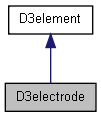
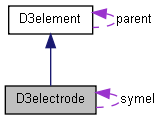
The father class is D3element, which means an electrode consists of at least one 3-dimensional element and additional attributes such as voltage etc.
| D3electrode::~D3electrode |
( |
| ) |
|
Member Function Documentation
| int D3electrode::GetCardinalNumber |
( |
| ) |
|
| int D3electrode::GetTotalrot |
( |
| ) |
|
| double D3electrode::GetVoltage |
( |
| ) |
|
Gives the voltage of the electrode. Unit: Volt.
Allocates an D3element to an electrode, multiple elements can be allocated to one electrode.
- Parameters:
-
| el | D3element that is being allocated to the electrode |
| void D3electrode::SetCardinalNumber |
( |
int |
num | ) |
|
| void D3electrode::SetSymmetry |
( |
bool |
xsym, |
|
|
bool |
ysym, |
|
|
bool |
zsym, |
|
|
bool |
diagmirror, |
|
|
int |
rotsym = 0, |
|
|
int |
totalrot2 = 0 |
|
) |
| |
Eliminates small numerical deviations from perfect symmetry.
If you need an electrode that is symmetric to a certain plane or direction, you have to place it properly at first.
The method will now only correct small numerical deviations from perfect symmetry! It cannot provide large-scale translations or rotations!
xsym=true means symmetric with respect to x=0 plane
ysym=true means symmetric with respect to y=0 plane
zsym=true means symmetric with respect to z=0 plane
diagmirror=true means symmetric with respect of exchange of x and y (if z is set as axis in SymmetrizeCharges())
diagmirror=true means symmetric with respect of exchange of y and z (if x is set as axis in SymmetrizeCharges())
diagmirror=true means symmetric with respect of exchange of x and z (if y is set as axis in SymmetrizeCharges())
rotsym means that symmetric with respect to rotsym/totalsym*360 degree rotation (set in a loop if you have rotational symmetry)
- Parameters:
-
| xsym | true, if symmetric with respect to x=0 plane |
| ysym | true, if symmetric with respect to y=0 plane |
| zsym | true, if symmetric with respect to z=0 plane |
| diagmirror | true, if see above |
| rotsym | ?? int ?? |
| totalrot2 | ?? |
| void D3electrode::SetSymmetryWith |
( |
bool |
xsym, |
|
|
bool |
ysym, |
|
|
bool |
zsym, |
|
|
bool |
diagmirror, |
|
|
D3electrode * |
symel2, |
|
|
int |
rotsym = 0, |
|
|
int |
totalrot = 0 |
|
) |
| |
Eliminates small numerical deviations from perfect symmetry.
If you need an electrode that is symmetric to a certain plane or direction, you have to place it properly at first.
The method will now only correct small numerical deviations from perfect symmetry! It cannot provide large-scale translations or rotations!
Additionally to the methode SetSymmetry , this method also provides to set the current electrode in perfect symmetry with the one specified by *syme12
xsym=true means symmetric with respect to x=0 plane
ysym=true means symmetric with respect to y=0 plane
zsym=true means symmetric with respect to z=0 plane
diagmirror=true means symmetric with respect of exchange of x and y (if z is set as axis in SymmetrizeCharges())
diagmirror=true means symmetric with respect of exchange of y and z (if x is set as axis in SymmetrizeCharges())
diagmirror=true means symmetric with respect of exchange of x and z (if y is set as axis in SymmetrizeCharges())
symel2 is the other electrode unequal to *this that the symmetry refers to
rotsym means that symmetric with respect to rotsym/totalsym*360 degree rotation (set in a loop if you have rotational symmetry)
- Parameters:
-
| xsym | true, if symmetric with respect to x=0 plane |
| ysym | true, if symmetric with respect to y=0 plane |
| zsym | true, if symmetric with respect to z=0 plane |
| diagmirror | true, if see above |
| symel2 | other electrode unequal to *this that the symmetry refers to |
| rotsym | ?? int ?? |
| totalrot | ?? |
| void D3electrode::SetVoltage |
( |
double |
voltage_ | ) |
|
Sets the voltage for the electrode. Unit: Volt.
- Parameters:
-
| voltage_ | voltage for the electrode, unit: Volt. |
Member Data Documentation
The documentation for this class was generated from the following file:
 1.7.3
1.7.3

